


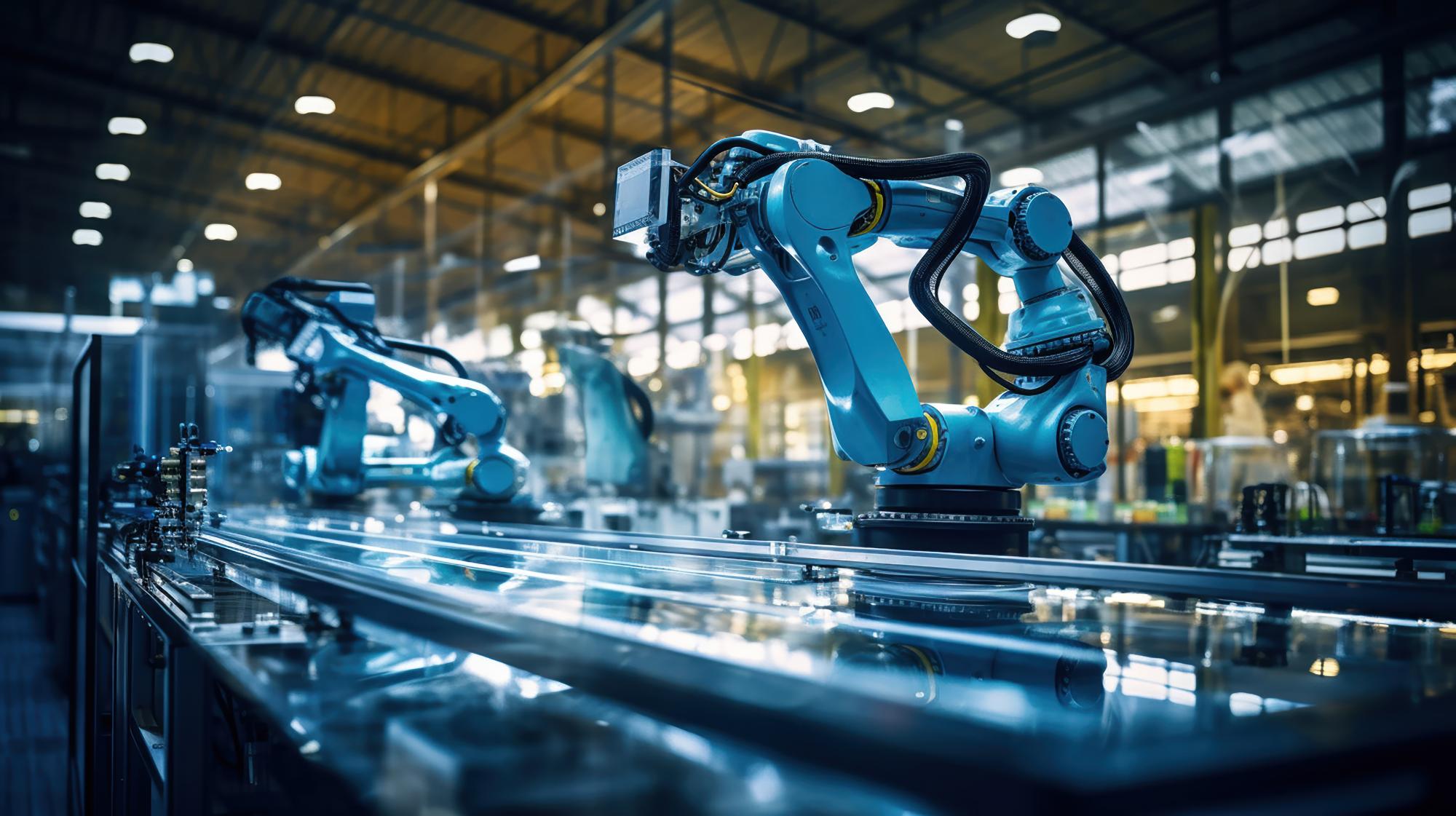
In recent years, the shortage of skilled labor has become one of the main challenges for the global manufacturing sector. The aging workforce, combined with the increasing demand for specialized skills, is making it difficult to find personnel capable of operating in increasingly complex and technologically advanced industrial environments.
In this context, artificial intelligence (AI) is emerging as a key solution to bridge the gap between the demand and supply of skills, ensuring operational continuity, improving efficiency, and supporting the transition to Industry 4.0.
Artificial Intelligence as a Strategic Lever for Automation
Traditionally, industrial automation has focused on repetitive and standardized tasks. However, with the integration of AI, companies can now take a qualitative leap forward: machines are no longer limited to executing programmed tasks—they can learn, adapt, and autonomously optimize production processes.
Technologies such as computer vision, machine learning, and predictive analytics enable, for example, the implementation of AI-driven predictive maintenance systems that monitor machinery in real time and anticipate potential failures. This approach drastically reduces downtime, improves plant productivity, and lowers operating costs—without requiring constant technical supervision.
Generative AI: Immediate and Intelligent Support for Technicians and Operators
One of the most promising applications is generative artificial intelligence, which provides immediate support to field operators. Thanks to technologies like Retrieval-Augmented Generation (RAG), it’s possible to ask natural language questions—such as “Which valve do I need to replace in this system?”—and receive accurate answers drawn directly from technical manuals or corporate databases.
This functionality enables:
- A significant reduction in time spent searching for information
- Fewer errors when interpreting complex technical documentation
- The delivery of always up-to-date, context-specific instructions:
Generative AI can also automate the creation of technical reports, checklists, intervention logs, and internal communications, simplifying document management and improving traceability of performed tasks.
A Positive Impact on the Workforce: Reskilling and Safety
Contrary to the narrative that automation destroys jobs, the adoption of AI is positively redefining the human role in factories. Smart technologies relieve workers from repetitive, dangerous, or physically demanding tasks, allowing them to focus on higher-value activities.
In addition, features such as:
- Intuitive human-machine interfaces
- Real-time decision support systems
- AI-powered voice and visual assistance
enable even less experienced workers to operate safely and efficiently in complex industrial settings—while significantly accelerating their learning curve.
A Competitive Advantage for Companies
This transformation requires a cultural paradigm shift. Companies must invest in continuous training, develop digital skills, and foster greater familiarity with intelligent systems.
In this context, AI also serves as a powerful training tool, facilitating:
- Advanced simulators that provide immersive, hands-on learning experiences
- Augmented reality environments for safe and realistic training scenarios
- Personalized e-learning platforms that adapt to each worker’s skill level and learning pace
The goal is to build a resilient and digitally ready workforce, capable of driving industrial innovation forward.
Intellico: AI Solutions for the Industry of the Future
In this digital transformation landscape, Intellico.ai positions itself as a key technology partner for industrial companies seeking to address the skilled labor shortage through innovative approaches.
With tailored solutions based on artificial intelligence, machine learning, and generative AI, Intellico supports process automation, optimizes decision-making, and enables a more flexible, sustainable, and intelligent production model.
Innovation is at the heart of our vision: we promote a virtuous collaboration between people and technologies to build the industry of the future—today.